
-
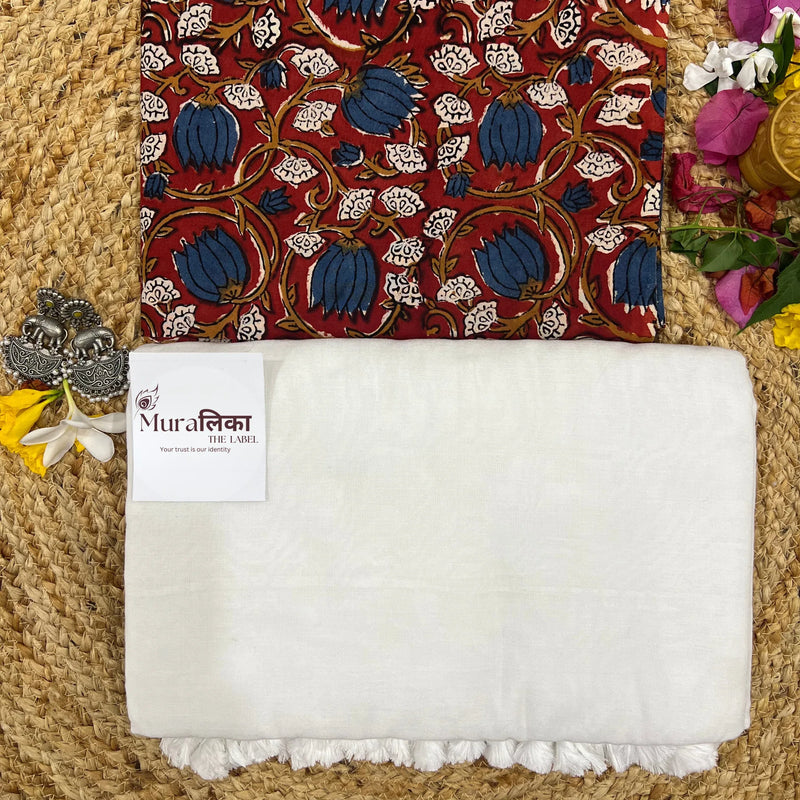
Muralika Off White Handloom Saree
Regular price ₹1,697.00 INRRegular priceUnit price per₹3,499.00 INRSale price ₹1,697.00 INR52% OFF -

 52% OFF
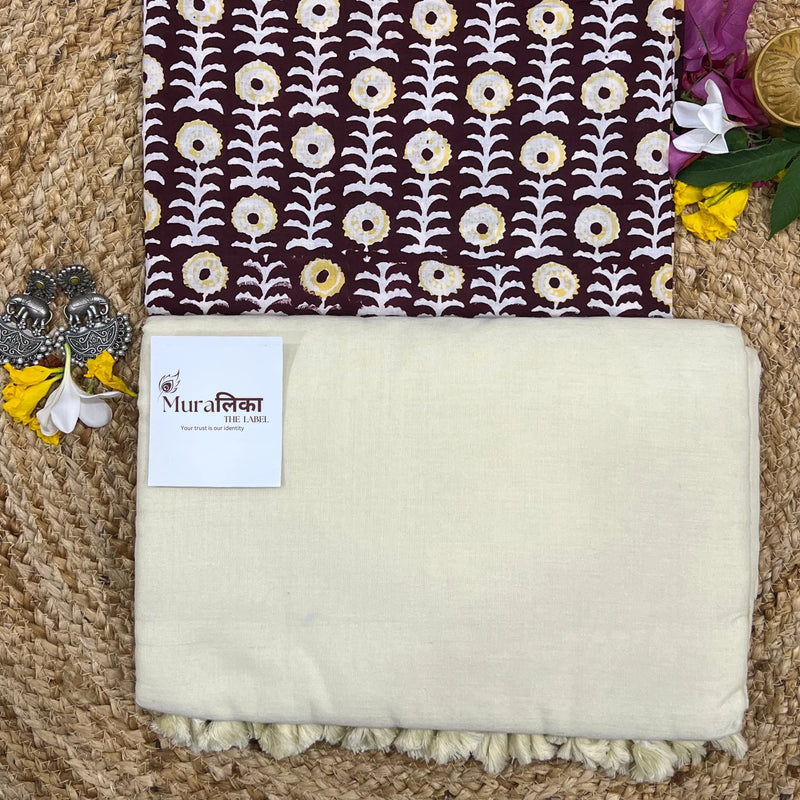
Muralika White Handloom Saree
Regular price ₹1,697.00 INRRegular priceUnit price per₹3,499.00 INRSale price ₹1,697.00 INR52% OFF


About this collection ▼
Onam 2026 falls on Thiruvonam, Wednesday 26 August, with Atham opening the ten days on 17 August. This is our Onam edit: sarees in the cream, ivory, white and gold palette Kerala calls kasavu — handloom tissue with woven zari, crisp white handloom cotton, and soft mulmul finished with gold borders.
An honest note. We are a small-batch Indian label, not a Kerala handloom house — we do not weave traditional kasavu. What we make are lightweight cotton and tissue sarees in the same cream-and-gold language, cut for a long sadhya in late-August humidity. If you want certified Balaramapuram or Chendamangalam kasavu, buy from a Kerala weavers' co-operative. If you want a soft, breathable saree in that palette that you will keep wearing after the festival, this edit is for you.
How to choose an Onam saree
- Palette — an off-white or cream ground with a gold zari border (the kara). A thin red line along the border is traditional, and so are red or gold tassels.
- Fabric — Onam lands in the humid tail of the monsoon. Mulmul, handloom cotton and tissue cotton breathe and hold a pleat; heavy silk does not.
- Border width — a broad kasavu border reads formal and photographs well. A fine zari stripe reads everyday, and you will wear it more than once.
- Length — our mulmul sarees run 5.5 metres without a blouse piece; the tissue sarees run 6.3 metres and include one.
Every piece here is handcrafted in small batches in India, with free shipping and cash on delivery. For draping, blouse and jewellery notes, read our Onam saree guide. You may also like our tissue sarees, handloom cotton sarees and mulmul cotton sarees.
Bestsellers
-
Sunflower Off White Embroidered Mulmul Cotton Saree
Regular price ₹2,297.00 INRRegular priceUnit price per₹3,999.00 INRSale price ₹2,297.00 INR43% OFF -
Parijaat Green Embroidered Mulmul Cotton Saree
Regular price ₹2,197.00 INRRegular priceUnit price per₹3,999.00 INRSale price ₹2,197.00 INR45% OFF -
 43% OFF Bestseller
Phoolwari Off White Embroidered Mulmul Cotton Saree
Regular price ₹2,297.00 INRRegular priceUnit price per₹3,999.00 INRSale price ₹2,297.00 INR43% OFF Bestseller -
Black Lace Border Mulmul Cotton Saree
Regular price ₹1,997.00 INRRegular priceUnit price per₹4,997.00 INRSale price ₹1,997.00 INR60% OFF


You will also love
-
Sunflower Off White Embroidered Mulmul Cotton Saree
Regular price ₹2,297.00 INRRegular priceUnit price per₹3,999.00 INRSale price ₹2,297.00 INR43% OFF -
43% OFF Bestseller
Phoolwari Off White Embroidered Mulmul Cotton Saree
Regular price ₹2,297.00 INRRegular priceUnit price per₹3,999.00 INRSale price ₹2,297.00 INR43% OFF Bestseller -
Parijaat Green Embroidered Mulmul Cotton Saree
Regular price ₹2,197.00 INRRegular priceUnit price per₹3,999.00 INRSale price ₹2,197.00 INR45% OFF -
 54% OFF Bestseller
Gulmohar Yellow Handpainted Mulmul cotton Saree
Regular price ₹2,297.00 INRRegular priceUnit price per₹4,997.00 INRSale price ₹2,297.00 INR54% OFF Bestseller

Just Launched
-
Muralika Purple & Rama Handloom Cotton Saree
Regular price ₹2,197.00 INRRegular priceUnit price per₹2,997.00 INRSale price ₹2,197.00 INR27% OFF -
Muralika Rama Green Handloom Cotton Saree
Regular price ₹2,197.00 INRRegular priceUnit price per₹2,997.00 INRSale price ₹2,197.00 INR27% OFF -
Muralika Maroon & Mehendi Handloom Cotton Saree
Regular price ₹2,197.00 INRRegular priceUnit price per₹2,997.00 INRSale price ₹2,197.00 INR27% OFF -
Muralika Maroon & Grey Handloom Cotton Saree
Regular price ₹2,197.00 INRRegular priceUnit price per₹2,997.00 INRSale price ₹2,197.00 INR27% OFF


Tissue Tales
-
 50% OFF Bestseller
Muralika Pure Elegance Handloom Tissue Saree
Regular price ₹1,997.00 INRRegular priceUnit price per₹3,997.00 INRSale price ₹1,997.00 INR50% OFF Bestseller -
Muralika Pure Elegance Handloom Tissue Saree
Regular price ₹1,997.00 INRRegular priceUnit price per₹3,997.00 INRSale price ₹1,997.00 INR50% OFF -
Muralika Pure Elegance Handloom Tissue Saree
Regular price ₹1,997.00 INRRegular priceUnit price per₹3,997.00 INRSale price ₹1,997.00 INR50% OFF -
 50% OFF
Muralika Handloom Tissue Saree
Regular price ₹1,997.00 INRRegular priceUnit price per₹3,997.00 INRSale price ₹1,997.00 INR50% OFF


